


Our Team
Leader

Anna Zawistowska-Deniziak, PhD DSc
Anna Zawistowska-Deniziak, PhD, DSc, is an immunologist and parasitologist specializing in the immunobiology of pathogens, with particular expertise in host–parasite interactions, immune modulation, and the development of novel diagnostic and vaccine strategies. Her research focuses on the molecular mechanisms regulating immune responses induced by helminths and other pathogens, as well as on the identification of molecules with diagnostic and therapeutic potential. She graduated in Biotechnology from the Warsaw University of Life Sciences (SGGW), received her PhD in Biological Sciences from the Institute of Parasitology of the Polish Academy of Sciences, and obtained her habilitation (DSc) in Biological Sciences from the University of Warsaw. She further developed her research expertise during a long-term postdoctoral fellowship at the Leiden University Medical Center (the Netherlands), where she conducted research in immunometabolism and the immunology of infectious diseases.
Her research interests include:
- parasite-induced immunomodulation and the immunological effects of parasite-derived molecules,
- identification of novel antigens and diagnostic biomarkers,
- development of innovative vaccines against zoonotic parasites,
- immunometabolism and regulation of immune responses,
- the impact of climate change on the emergence and spread of pathogens and zoonotic diseases within the One Health framework.
She currently leads and collaborates on research projects focusing on the development of vaccines against Fasciola hepatica and Trichinella spp., as well as on the diagnosis and epidemiology of dirofilariasis. Her work is highly interdisciplinary, integrating immunology, parasitology, molecular biology, and translational research to develop innovative diagnostic and therapeutic solutions. She has authored more than 40 peer-reviewed publications indexed in the Journal Citation Reports (JCR), has served as both principal investigator and collaborator in numerous national and international research projects, and maintains active collaborations with research institutions across Europe. She is also committed to mentoring early-career researchers and building an interdisciplinary research environment within the Pathogen Immunobiology Research Group.




Researchers

Renata Welc-Falęciak, PhD DSc
Her research focuses on the epidemiology and genetic diversity of tick-borne pathogens circulating in ticks and their hosts, including individuals with different immunological status. She also investigates the risk of transmission of tick-borne pathogens through blood transfusion. An important aspect of her work is the analysis of the role of the tick microbiome, co-infections, and other factors influencing pathogen transmission at the tick–human interface. As part of the OPUS 28 project, she is using phage display technology to identify novel Borrelia antigens that may serve as future biomarkers for the differential diagnosis of Lyme borreliosis and relapsing fever caused by Borrelia species.

Mateusz Pękacz, PhD
His research focuses on the molecular mechanisms underlying host–parasite interactions, with particular emphasis on Dirofilaria repens, a filarial nematode responsible for subcutaneous dirofilariasis in dogs and humans. His work investigates immune responses to selected antigens from different developmental stages of the parasite and explores their potential application in the development of novel diagnostic tools and immunoprophylactic strategies against dirofilariasis.
Postdoctoral Researchers
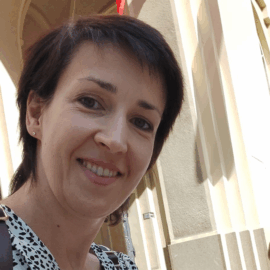
Katarzyna Basałaj, PhD
Postdoctoral researcher in the OPUS 28 project entitled "Identification of Novel Borrelia miyamotoi Antigens and Their Role in the Differential Diagnosis of Lyme Borreliosis and Relapsing Fever". She graduated in Biotechnology from the Warsaw University of Life Sciences (SGGW), where she also obtained her PhD in Biological Sciences. She has gained research experience as a team member in numerous projects funded by the National Science Centre (NCN) and the National Centre for Research and Development (NCBR). Her research focuses on phage display technology, which she applies to the selection of monoclonal antibodies and the identification of novel diagnostic biomarkers.
PhD Students
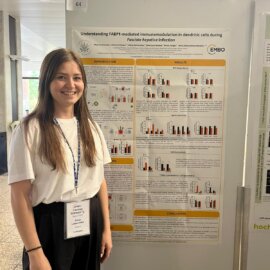
Alicja Laskowska, MSc
Alicja is a PhD student in the SONATA 17 project entitled "The Role and Significance of Chemokines in Parasitic Infections – A Novel Approach to the Development of an Effective Vaccine Against Helminths". She obtained both her Bachelor's and Master's degrees in Animal Bioengineering from the Warsaw University of Life Sciences (SGGW). Her Bachelor's thesis focused on the identification of diagnostic peptides for Toxocara canis infection using phage display technology. During her Master's studies, she investigated the effects of native Fasciola hepatica proteins on the cytokine and chemokine secretion profiles of human dendritic cells and macrophages. It was during this work that she developed a particular interest in F. hepatica, which has since become the main focus of her research. Her current research is centred on immune responses to parasitic infections, with particular emphasis on the mechanisms by which helminths modulate the host immune system.
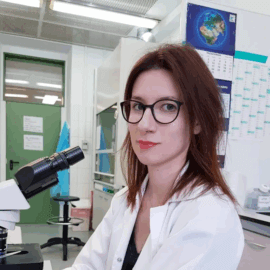
Julia Koczwarska, MSc
PhD student in the OPUS 19 project. She holds a Master's degree in Biology from the Faculty of Biology, University of Warsaw. Her doctoral research focuses on the impact of co-infections on the occurrence of Borrelia spirochetes in Ixodes ricinus ticks and on the efficiency of pathogen transmission at the tick–human interface. Her research employs a range of molecular biology techniques, including conventional PCR, real-time PCR, droplet digital PCR (ddPCR), and restriction fragment length polymorphism (RFLP) analysis.